Past standards called for the RSA to extend only 60m 200 feet from the ends of the runway. Runway safety areas surround the entire runway including the ends.

Pdf Runway Safety Areas
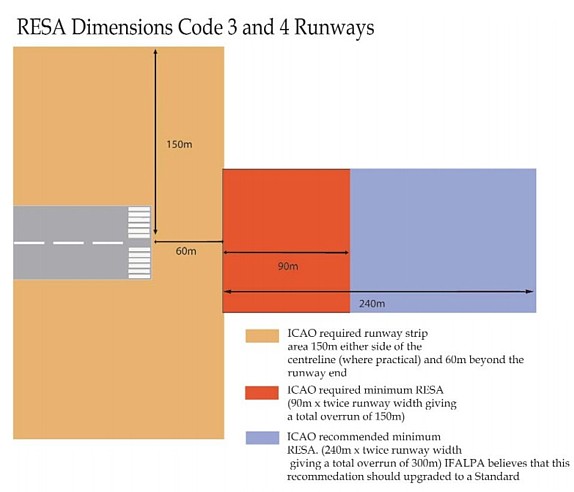
543 A runway end safety area is required to extend from the end of a runway strip for as great a distance as practicable but at least 90.

. Later the designation of the area was changed to Runway Safety Area and the distance it extended beyond the runway end was lengthened to reflect its functional role. Based on 7 documents. End of the runway during a rejected takeoff or while landing.
Runway Safety Areas RSA The RSA is a defined surface surrounding the runway typically 500-feet wide and extending 1000-feet beyond each runway end. It provides a graded area in the event that an aircraft overruns undershoots or veers off the side of the runway runway excursion. A good and reliable area at the end of runways a Runway End Safety Area RESA is the best way of mitigating impact in case of an excursion of an aircraft.
Taxiway safety areas are only located on the sides of the taxiway and vary in width from 49 feet to 262 feet. Runway-end safety area RESA means an area symmetrical about the runway centre line and adjacent to the end of the strip primarily intended to reduce the risk of damage to an aeroplane undershooting or overrunning the runway. Runway End Safety Areas RESAs are a formal means to limit the consequences when aeroplanes overrun the end of a runway during a landing or a rejected take off or undershoot the intended landing runway.
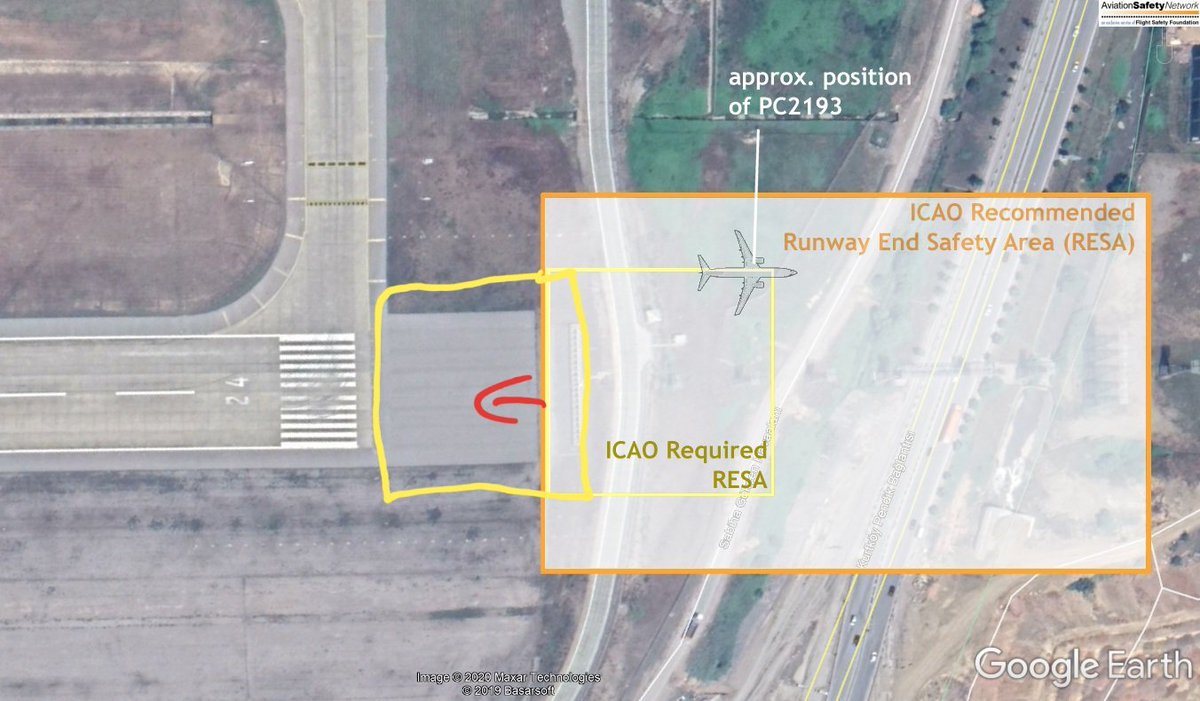
The consequences of many runway excursions especially overruns are made much more serious because the aircraft end up beyond the confines of the ICAO-defined Runway End Safety Area RESA. They are constructed to provide a cleared and graded area which is as far as practicable clear of all but frangible objects. 542 A runway end safety area is required to be provided at each end of a runway strip where.
A runway safety area RSA or runway end safety area RESA is defined as the surface surrounding the runway prepared or suitable for reducing the risk of damage to airplanes in the event of an undershoot overshoot or excursion from the runway. Define runway end safety area. The normal protection for an aircraft and its occupants to these types of events is provided by so-called runway end safety areas RESAs.
A runway-end safety area should extend from the end of a runway strip for as great a distance as practicable but at least 300 ft 90 m. A significant part of all aircraft accidents and serious incidents occurs during takeoff and landing. Most large commercial airports have.
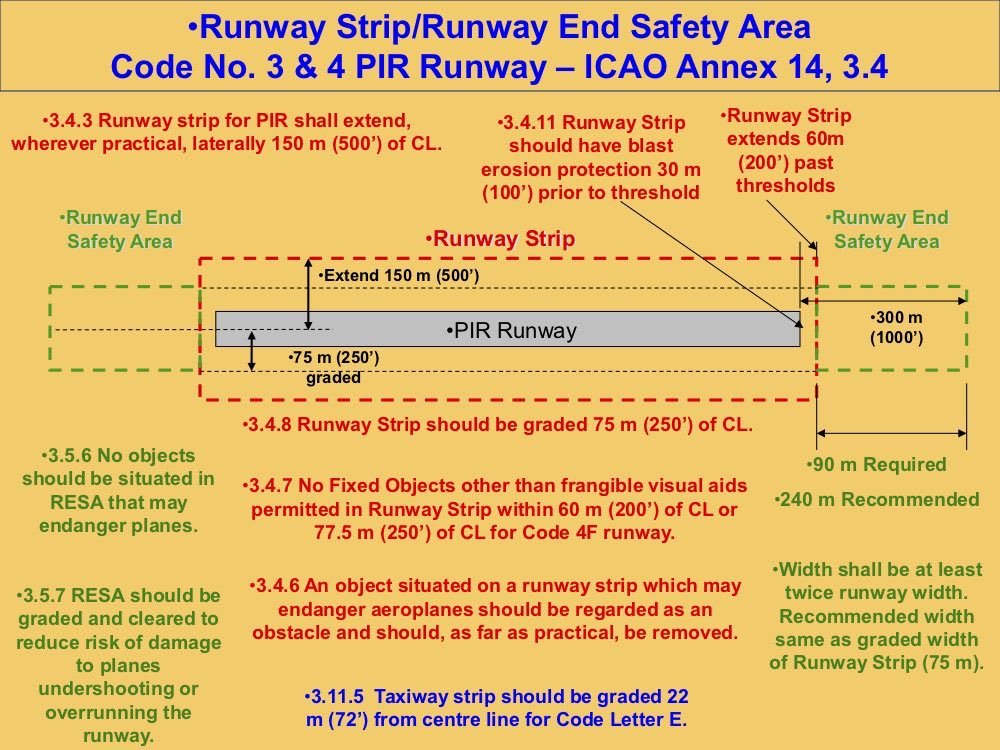
One of these safety areas is the runway end safety area RESA the space behind the end of the runway strip. The code number is 3 or 4. Runway StripRunway End Safety Area Code No.
Most runways have enough area for a sufficient RESA stopping an aircraft at 70 knots within 300 meters from the end of the runway ICAO recommendation. An area symmetrical about the extended runway centerline and adjacent to the end of the strip primarily intended to reduce the risk of damage to an airplane undershooting or overrunning the runway ICAO. A runway-end safety area should extend from the end of a runway strip for as great a distance as practicable but at least 300 ft 90 m.
Sample 1 Sample 2 Sample 3. Prior to conducting an aircraft operation on a runway a pilot is responsible for determining that the runway length and width is sufficient for the operation. Many of these events involve a runway overrun or undershoot of the runway.
RESA is flat and in most cases grass field without objects whose purpose is to mitigate the consequences of overrun incidents and accidents. 3 4 PIR Runway ICAO Annex 14 34 Runway Strip extends 60m 200 past thresholds Runway Strip Runway End Safety Area 300 m 1000 347 No Fixed Objects other than frangible visual aids permitted in Runway Strip within 60 m 200 of CL or 775 m 250. It also provides an area that allows ease of access for emergency-response vehicles.
Runway Safety Areas RSA The RSA is a defined surface surrounding the runway typically 500-feet wide and extending 1000-feet beyond each runway end. The aircraft may be catastrophically damaged because of major obstructions or terrain changes encountered soon after this protected area has been exceeded. It provides a graded area in the event that an aircraft overruns undershoots or veers off the side of the runway runway excursion.
Means an area symmetrical about the extended runway centreline and adjacent to the end of the strip primarily intended to reduce the risk of damage to an aircraft undershooting or overrunning the runway. By providing an area that is free of obstacles and can support the weight of an aircraft without major structural damage a RESA increases the level of safety to the travelling public. And the code number is 1 or 2 and the runway is an instrument one.
An area symmetrical about the extended runway centerline and adjacent to the end of the strip primarily intended to reduce the risk of damage to an airplane undershooting or overrunning the runway ICAO. The dimensions range from 120 feet to 500 feet in width and 240 feet to 1000 feet in length beyond the departure end of the runway. Annex 14 to the Convention on International Civil Aviation Aerodromes defines RESA as an.
The Landing Area Source Own Work Based On J Rajchel E Zablocki Download Scientific Diagram
See Aviationsafety S Tweet On Twitter Twitter
See Aviationsafety S Tweet On Twitter Twitter
The Airline Pilots Forum And Resource


0 Comments